

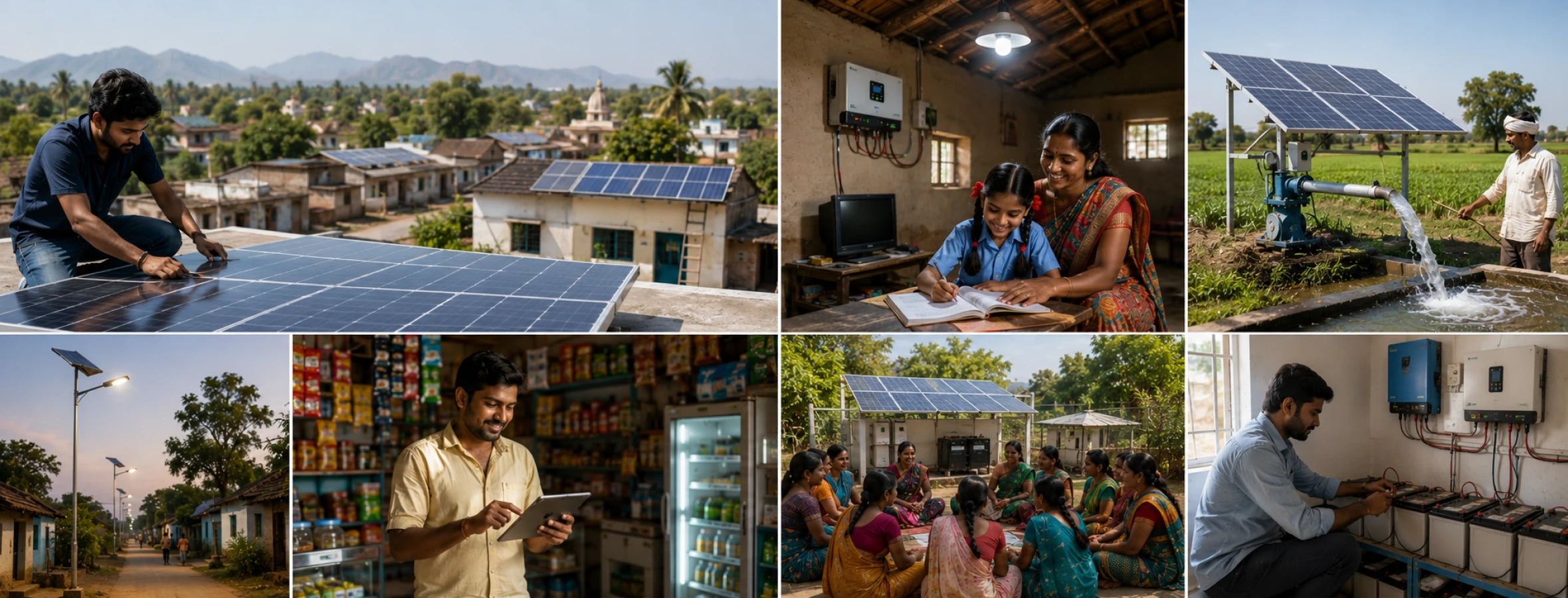
Some of the most transformative impacts of renewable energy are taking place closest to where people live, work and farm. Distributed Renewable Energy (DRE) is enabling households, farmers, small businesses and communities to participate directly in India's clean energy transition while improving energy access, affordability and resilience.
The Government of India has placed DRE at the centre of its renewable energy strategy through programmes that extend the benefits of clean energy beyond utility-scale projects. The PM Surya Ghar: Muft Bijli Yojana is accelerating rooftop solar adoption across households, empowering citizens to become energy producers while reducing electricity costs. Similarly, the PM-KUSUM Scheme is supporting the solarisation of agriculture through solar pumps and decentralised solar power plants, helping farmers reduce input costs and create additional sources of income.
India is also expanding energy access in remote and underserved regions through initiatives such as PM JANMAN and DA-JGUA, which are helping bring clean energy solutions to vulnerable communities and geographically challenging areas. These efforts reflect a broader commitment to ensuring that the energy transition remains inclusive and citizen-centric.
Distributed renewable energy systems—including rooftop solar, solar pumps, mini-grids and standalone solar solutions—are increasingly recognised as important tools for strengthening livelihoods, improving climate resilience and supporting local economic development.
At BRE Summit 2026, policymakers, development organisations, financiers and technology innovators will explore scalable business models, financing mechanisms and community-led solutions that can accelerate the adoption of distributed renewable energy across India and the world.